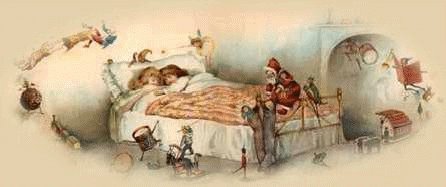
MR. BLUFF'S EXPERIENCES OF HOLIDAYS* Reprinted by permission of Moffat, Yird & Co., from Christmas. R.H.
 Schauffler, Editor.

 OLIVER BELL BUNCE

 "I hate holidays," said Bachelor Bluff to me, with some little
 irritation, on a Christmas a few years ago. Then he paused an instant,
 after which he resumed: "I don't mean to say that I hate to see people
 enjoying themselves. But I hate holidays, nevertheless, because to me
 they are always the saddest and dreariest days of the year. I shudder
 at the name of holiday. I dread the approach of one, and thank heaven
 when it is over. I pass through, on a holiday, the most horrible
 sensations, the bitterest feelings, the most oppressive melancholy; in
 fact, I am not myself at holiday-times."

 "Very strange," I ventured to interpose.

 "A plague on it!" said he, almost with violence. "I'm not inhuman. I
 don't wish anybody harm. I'm glad people can enjoy themselves. But I
 hate holidays all the same. You see, this is the reason: I am a
 bachelor; I am without kin; I am in a place that did not know me at
 birth. And so, when holidays come around, there is no place anywhere
 for me. I have friends, of course; I don't think I've been a very
 sulky, shut-in, reticent fellow; and there is many a board that has a
 place for me--but not at Christmastime. At Christmas, the dinner is a
 family gathering; and I've no family. There is such a gathering of
 kindred on this occasion, such a reunion of family folk, that there is
 no place for a friend, even if the friend be liked. Christmas, with all
 its kindliness and charity and good-will, is, after all, deuced
 selfish. Each little set gathers within its own circle; and people like
 me, with no particular circle, are left in the lurch. So you see, on
 the day of all the days in the year that my heart pines for good cheer,
 I'm without an invitation.

 "Oh, it's because I pine for good cheer," said the bachelor, sharply,
 interrupting my attempt to speak, "that I hate holidays. If I were an
 infernally selfish fellow, I wouldn't hate holidays. I'd go off and
 have some fun all to myself, somewhere or somehow. But, you see, I hate
 to be in the dark when all the rest of the world is in light. I hate
 holidays because I ought to be merry and happy on holidays and can't.

 "Don't tell me," he cried, stopping the word that was on my lips; "I
 tell you, I hate holidays. The shops look merry, do they, with their
 bright toys and their green branches? The pantomime is crowded with
 merry hearts, is it? The circus and the show are brimful of fun and
 laughter, are they? Well, they all make me miserable. I haven't any
 pretty-faced girls or bright-eyed boys to take to the circus or the
 show, and all the nice girls and fine boys of my acquaintance have
 their uncles or their grand-dads or their cousins to take them to those
 places; so, if I go, I must go alone. But I don't go. I can't bear the
 chill of seeing everybody happy, and knowing myself so lonely and
 desolate. Confound it, sir, I've too much heart to be happy under such
 circumstances! I'm too humane, sir!
 And the result is, I hate holidays. It's miserable to be out, and yet I
 can't stay at home, for I get thinking of Christmases past. I can't
 read--the shadow of my heart makes it impossible. I can't walk--for I
 see nothing but pictures through the bright windows, and happy groups
 of pleasure-seekers. The fact is, I've nothing to do but to hate
 holidays. But will you not dine with me?"

 Of course, I had to plead engagement with my own family circle, and I
 couldn't quite invite Mr. Bluff home that day, when Cousin Charles and
 his wife, and Sister Susan and her daughter, and three of my wife's kin
 had come in from the country, all to make a merry Christmas with us. I
 felt sorry, but it was quite impossible, so I wished Mr. Bluff a "Merry
 Christmas," and hurried homeward through the cold and nipping air.

 I did not meet Bachelor Bluff again until a week after Christmas of the
 next year, when I learned some strange particulars of what occurred to
 him after our parting on the occasion just described. I will let
 Bachelor Bluff tell his adventure for himself.

 "I went to church," said he, "and was as sad there as everywhere else.
 Of course, the evergreens were pretty, and the music fine; but all
 around me were happy groups of people, who could scarcely keep down
 merry Christmas long enough to do reverence to sacred Christmas. And
 nobody was alone but me. Every happy paterfamilias in his pew
 tantalized me, and the whole atmosphere of the place seemed so much
 better suited to every one else than me that I came away hating
 holidays worse than ever. Then I went to the play, and sat down in a
 box all alone by myself. Everybody seemed on the best of terms with
 everybody else, and jokes and banter passed from one to another with
 the most good-natured freedom. Everybody but me was in a little group
 of friends. I was the only person in the whole theatre that was alone.
 And then there was such clapping of hands, and roars of laughter, and
 shouts of delight at all the fun going on upon the stage, all of which
 was rendered doubly enjoyable by everybody having somebody with whom to
 share and interchange the pleasure, that my loneliness got simply
 unbearable, and I hated holidays infinitely worse than ever.

 "By five o'clock the holiday became so intolerable that I said I'd go
 and get a dinner. The best dinner the town could provide. A sumptuous
 dinner for one. A dinner with many courses, with wines of the finest
 brands, with bright lights, with a cheerful fire, with every condition
 of comfort--and I'd see if I couldn't for once extract a little
 pleasure out of a holiday!

 "The handsome dining-room at the club looked bright, but it was empty.
 Who dines at this club on Christmas but lonely bachelors? There was a
 flutter of surprise when I ordered a dinner, and the few attendants
 were, no doubt, glad of something to break the monotony of the hours.

 "My dinner was well served. The spacious room looked lonely; but the
 white, snowy cloths, the rich window hangings, the warm tints of the
 walls, the sparkle of the fire in the steel grate, gave the room an air
 of elegance and cheerfulness; and then the table at which I dined was
 close to the window, and through the partly drawn curtains were visible
 centres of lonely, cold streets, with bright lights from many a window,
 it is true, but there was a storm, and snow began whirling through the
 street. I let my imagination paint the streets as cold and dreary as it
 would, just to extract a little pleasure by way of contrast from the
 brilliant room of which I was apparently sole master.

 "I dined well, and recalled in fancy old, youthful Christmases, and
 pledged mentally many an old friend, and my melancholy was mellowing
 into a low, sad undertone, when, just as I was raising a glass of wine
 to my lips, I was startled by a picture at the windowpane. It was a
 pale, wild, haggard face, in a great cloud of black hair, pressed
 against the glass. As I looked it vanished. With a strange thrill at my
 heart, which my lips mocked with a derisive sneer, I finished the wine
 and set down the glass. It was, of course, only a beggar-girl that had
 crept up to the window and stole a glance at the bright scene within;
 but still the pale face troubled me a little, and threw a fresh shadow
 on my heart. I filled my glass once more with wine, and was again about
 to drink, when the face reappeared at the window. It was so white, so
 thin, with eyes so large, wild, and hungry-looking, and the black,
 unkempt hair, into which the snow had drifted, formed so strange and
 weird a frame to the picture, that I was fairly startled. Replacing,
 untasted, the liquor on the table, I rose and went close to the pane.
 The face had vanished, and I could see no object within many feet of
 the window. The storm had increased, and the snow was driving in wild
 gusts through the streets, which were empty, save here and there a
 hurrying wayfarer. The whole scene was cold, wild, and desolate, and I
 could not repress a keen thrill of sympathy for the child, whoever it
 was, whose only Christmas was to watch, in cold and storm, the rich
 banquet ungratefully enjoyed by the lonely bachelor. I resumed my place
 at the table; but the dinner was finished, and the wine had no further
 relish. I was haunted by the vision at the window, and began, with an
 unreasonable irritation at the interruption, to repeat with fresh
 warmth my detestation of holidays. One couldn't even dine alone on a
 holiday with any sort of comfort, I declared. On holidays one was
 tormented by too much pleasure on one side, and too much misery on the
 other. And then, I said, hunting for justification of my dislike of the
 day, 'How many other people are, like me, made miserable by seeing the
 fullness of enjoyment others possess!'

 "Oh, yes, I know," sarcastically replied the bachelor to a comment of
 mine; "of course, all magnanimous, generous, and noble-souled people
 delight in seeing other people made happy, and are quite content to
 accept this vicarious felicity. But I, you see, and this dear little
 girl--"

 "Dear little girl?"

 "Oh, I forgot," said Bachelor Bluff, blushing a little, in spite of a
 desperate effort not to do so. "I didn't tell you. Well, it was so
 absurd! I kept thinking, thinking of the pale, haggard, lonely little
 girl on the cold and desolate side of the window-pane, and the
 over-fed, discontented, lonely old bachelor on the splendid side of the
 window-pane, and I didn't get much happier thinking about it, I can
 assure you. I drank glass after glass of the wine--not that I enjoyed
 its flavour any more, but mechanically, as it were, and with a sort of
 hope thereby to drown unpleasant reminders. I tried to attribute my
 annoyance in the matter to holidays, and so denounced them more
 vehemently than ever. I rose once in a while and went to the window,
 but could see no one to whom the pale face could have belonged.

 "At last, in no very amiable mood, I got up, put on my wrappers, and
 went out; and the first thing I did was to run against a small figure
 crouching in the doorway. A face looked up quickly at the rough
 encounter, and I saw the pale features of the window-pane. I was very
 irritated and angry, and spoke harshly; and then, all at once, I am
 sure I don't know how it happened, but it flashed upon me that I, of
 all men, had no right to utter a harsh word to one oppressed with so
 wretched a Christmas as this poor creature was. I couldn't say another
 word, but began feeling in my pocket for some money, and then I asked a
 question or two, and then I don't quite know how it came about--isn't
 it very warm here?" exclaimed Bachelor Bluff, rising and walking about,
 and wiping the perspiration from his brow.

 "Well, you see," he resumed nervously, "it was very absurd, but I did
 believe the girl's story--the old story, you know, of privation and
 suffering, and just thought I'd go home with the brat and see if what
 she said was all true. And then I remembered that all the shops were
 closed, and not a purchase could be made. I went back and persuaded the
 steward to put up for me a hamper of provisions, which the half-wild
 little youngster helped me carry through the snow, dancing with delight
 all the way. And isn't this enough?"

 "Not a bit, Mr. Bluff. I must have the whole story."

 "I declare," said Bachelor Bluff, "there's no whole story to tell. A
 widow with children in great need, that was what I found; and they had
 a feast that night, and a little money to buy them a load of wood and a
 garment or two the next day; and they were all so bright, and so merry,
 and so thankful, and so good, that, when I got home that night, I was
 mightily amazed that, instead of going to bed sour at holidays, I was
 in a state of great contentment in regard to holidays. In fact, I was
 really merry. I whistled. I sang. I do believe I cut a caper. The poor
 wretches I had left had been so merry over their unlooked-for Christmas
 banquet that their spirits infected mine.

 "And then I got thinking again. Of course, holidays had been miserable
 to me, I said. What right had a well-to-do, lonely old bachelor
 hovering wistfully in the vicinity of happy circles, when all about
 there were so many people as lonely as he, and yet oppressed with want?
 'Good gracious!' I exclaimed, 'to think of a man complaining of
 loneliness with thousands of wretches yearning for his help and
 comfort, with endless opportunities for work and company, with hundreds
 of pleasant and delightful things to do. Just to think of it! It put me
 in a great fury at myself to think of it. I tried pretty hard to escape
 from myself and began inventing excuses and all that sort of thing, but
 I rigidly forced myself to look squarely at my own conduct. And then I
 reconciled my confidence by declaring that, if ever after that day I
 hated a holiday again, might my holidays end at once and forever!

 "Did I go and see my proteges again? What a question! Why--well, no
 matter. If the widow is comfortable now, it is because she has found a
 way to earn without difficulty enough for her few wants. That's no
 fault of mine. I would have done more for her, but she wouldn't let me.
 But just let me tell you about New Year's--the New-Year's day that
 followed the Christmas I've been describing. It was lucky for me there
 was another holiday only a week off. Bless you! I had so much to do
 that day I was completely bewildered, and the hours weren't half long
 enough. I did make a few social calls, but then I hurried them over;
 and then hastened to my little girl, whose face had already caught a
 touch of colour; and she, looking quite handsome in her new frock and
 her ribbons, took me to other poor folk, and,--well, that's about the
 whole story.

 "Oh, as to the next Christmas. Well, I didn't dine alone, as you may
 guess. It was up three stairs, that's true, and there was none of that
 elegance that marked the dinner of the year before; but it was merry,
 and happy, and bright; it was a generous, honest, hearty Christmas
 dinner, that it was, although I do wish the widow hadn't talked so much
 about the mysterious way a turkey had been left at her door the night
 before. And Molly--that's the little girl--and I had a rousing
 appetite. We went to church early; then we had been down to the Five
 Points to carry the poor outcasts there something for their Christmas
 dinner; in fact, we had done wonders of work, and Molly was in high
 spirits, and so the Christmas dinner was a great success.

 "Dear me, sir, no! Just as you say. Holidays are not in the least
 wearisome any more. Plague on it! When a man tells me now that he hates
 holidays, I find myself getting very wroth. I pin him by the buttonhole
 at once, and tell him my experience. The fact is, if I were at dinner
 on a holiday, and anybody should ask me for a sentiment, I should say,
 'God bless all holidays!'"


 MASTER SANDY'S SNAPDRAGON*

 * This story was first published in Wide Awake, vol. 26.

 ELDRIDGE S. BROOKS

 There was just enough of December in the air and of May in the sky to
 make the Yuletide of the year of grace 1611 a time of pleasure and
 delight to every boy and girl in "Merrie England" from the princely
 children in stately Whitehall to the humblest pot-boy and scullery-girl
 in the hall of the country squire.

 And in the palace at Whitehall even the cares of state gave place to
 the sports of this happy season. For that "Most High and Mighty Prince
 James, by the Grace of God King of Great Britain, France, and
 Ireland"--as you will find him styled in your copy of the Old Version,
 or what is known as "King James' Bible"--loved the Christmas
 festivities, cranky, crabbed, and crusty though he was. And this year
 he felt especially gracious. For now, first since the terror of the Guy
 Fawkes plot which had come to naught full seven years before, did the
 timid king feel secure on his throne; the translation of the Bible, on
 which so many learned men had been for years engaged, had just been
 issued from the press of Master Robert Baker; and, lastly, much profit
 was coming into the royal treasury from the new lands in the Indies and
 across the sea.

 So it was to be a Merry Christmas in the palace at Whitehall. Great
 were the preparations for its celebration, and the Lord Henry, the
 handsome, wise and popular young Prince of Wales, whom men hoped some
 day to hail as King Henry of England, was to take part in a jolly
 Christmas mask, in which, too, even the little Prince Charles was to
 perform for the edification of the court when the mask should be shown
 in the new and gorgeous banqueting hall of the palace.

 And to-night it was Christmas Eve. The Little Prince Charles and the
 Princess Elizabeth could scarcely wait for the morrow, so impatient
 were they to see all the grand devisings that were in store for them.
 So good Master Sandy, under-tutor to the Prince, proposed to wise
 Archie Armstrong, the King's jester, that they play at snapdragon for
 the children in the royal nursery.

 The Prince and Princess clamoured for the promised game at once, and
 soon the flicker from the flaming bow lighted up the darkened nursery
 as, around the witchlike caldron, they watched their opportunity to
 snatch the lucky raisin. The room rang so loudly with fun and laughter
 that even the King himself, big of head and rickety of legs, shambled
 in good-humouredly to join in the sport that was giving so much
 pleasure to the royal boy he so dearly loved, and whom he always called
 "Baby Charles."

 But what was snapdragon, you ask? A simple enough game, but dear for
 many and many a year to English children. A broad and shallow bowl or
 dish half-filled with blazing brandy, at the bottom of which lay
 numerous toothsome raisins--a rare tidbit in those days--and one of
 these, pierced with a gold button, was known as the "lucky raisin."
 Then, as the flaming brandy flickered and darted from the yawning bowl,
 even as did the flaming poison tongues of the cruel dragon that St.
 George of England conquered so valiantly, each one of the revellers
 sought to snatch a raisin from the burning bowl without singe or scar.
 And he who drew out the lucky raisin was winner and champion, and could
 claim a boon or reward for his superior skill. Rather a dangerous game,
 perhaps it seems, but folks were rough players in those old days and
 laughed at a burn or a bruise, taking them as part of the fun.

 So around Master Sandy's Snapdragon danced the royal children, and even
 the King himself condescended to dip his royal hands in the flames,
 while Archie Armstrong the jester cried out: "Now fair and softly,
 brother Jamie, fair and softly, man. There's ne'er a plum in all that
 plucking so worth the burning as there was in Signer Guy Fawkes'
 snapdragon when ye proved not to be his lucky raisin." For King's
 jesters were privileged characters in the old days, and jolly Archie
 Armstrong could joke with the King on this Guy Fawkes scare as none
 other dared.

 And still no one brought out the lucky raisin, though the Princess
 Elizabeth's fair arm was scotched and good Master Sandy's peaked beard
 was singed, and my Lord Montacute had dropped his signet ring in the
 fiery dragon's mouth, and even His Gracious Majesty the King was
 nursing one of his royal fingers.

 But just as through the parted arras came young Henry, Prince of Wales,
 little Prince Charles gave a boyish shout of triumph.

 "Hey, huzzoy!" he cried, "'tis mine, 'tis mine! Look, Archie; see, dear
 dad; I have the lucky raisin! A boon, good folk; a boon for me!" And
 the excited lad held aloft the lucky raisin in which gleamed the golden
 button.

 "Rarely caught, young York," cried Prince Henry, clapping his hands in
 applause. "I came in right in good time, did I not, to give you luck,
 little brother? And now, lad, what is the boon to be?"

 And King James, greatly pleased at whatever his dear "Baby Charles"
 said or did, echoed his eldest son's question. "Ay lad, 'twas a rare
 good dip; so crave your boon. What does my bonny boy desire?"

 But the boy hesitated. What was there that a royal prince, indulged as
 was he, could wish for or desire? He really could think of nothing, and
 crossing quickly to his elder brother, whom, boy-fashion, he adored, he
 whispered, "Ud's fish, Hal, what DO I want?"

 Prince Henry placed his hand upon his brother's shoulder and looked
 smilingly into his questioning eyes, and all within the room glanced
 for a moment at the two lads standing thus.

 And they were well worth looking at. Prince Henry of Wales, tall,
 comely, open-faced, and well-built, a noble lad of eighteen who called
 to men's minds, so "rare Ben Jonson" says, the memory of the hero of
 Agincourt, that other

 thunderbolt of war,
 Harry the Fifth, to whom in face you are
 So like, as Fate would have you so in worth;

 Prince Charles, royal Duke of York, Knight of the Garter and of the
 Bath, fair in face and form, an active, manly, daring boy of
 eleven--the princely brothers made so fair a sight that the King,
 jealous and suspicious of Prince Henry's popularity though he was,
 looked now upon them both with loving eyes. But how those loving eyes
 would have grown dim with tears could this fickle, selfish, yet
 indulgent father have foreseen the sad and bitter fates of both his
 handsome boys.

 But, fortunately, such foreknowledge is not for fathers or mothers,
 whatever their rank or station, and King James's only thought was one
 of pride in the two brave lads now whispering together in secret
 confidence. And into this he speedily broke.

 "Come, come, Baby Charles," he cried, "stand no more parleying, but out
 and over with the boon ye crave as guerdon for your lucky plum. Ud's
 fish, lad, out with it; we'd get it for ye though it did rain jeddert
 staves here in Whitehall."

 "So please your Grace," said the little Prince, bowing low with true
 courtier-like grace and suavity, "I will, with your permission, crave
 my boon as a Christmas favor at wassail time in to-morrow's revels."

 And then he passed from the chamber arm-in-arm with his elder brother,
 while the King, chuckling greatly over the lad's show of courtliness
 and ceremony, went into a learned discussion with my lord of Montacute
 and Master Sandy as to the origin of the snapdragon, which he, with his
 customary assumption of deep learning, declared was "but a modern
 paraphrase, my lord, of the fable which telleth how Dan Hercules did
 kill the flaming dragon of Hesperia and did then, with the apple of
 that famous orchard, make a fiery dish of burning apple brandy which he
 did name 'snapdragon.'"

 For King James VI of Scotland and I of England was, you see, something
 too much of what men call a pendant.

 Christmas morning rose bright and glorious. A light hoarfrost whitened
 the ground and the keen December air nipped the noses as it hurried the
 song-notes of the score of little waifs who, gathered beneath the
 windows of the big palace, sung for the happy awaking of the young
 Prince Charles their Christmas carol and their Christmas noel:

 A child this day is born,
 A child of great renown;
 Most worthy of a sceptre,
 A sceptre and a crown.

 Noel, noel, noel,
 Noel sing we may
 Because the King of all Kings
 Was born this blessed day.

 These tidings shepherds heard
 In field watching their fold,
 Were by an angel unto them
 At night revealed and told.

 Noel, noel, noel,
 Noel sing we may
 Because the King of all Kings
 Was born this blessed day.

 He brought unto them tidings
 Of gladness and of mirth,
 Which cometh to all people by
 This holy infant's birth.

 Noel, noel, noel,
 Noel sing we may
 Because the King of all Kings
 Was born this blessed day.

 The "blessed day" wore on. Gifts and sports filled the happy hours. In
 the royal banqueting hall the Christmas dinner was royally set and
 served, and King and Queen and Princes, with attendant nobles and
 holiday guests, partook of the strong dishes of those old days of
 hearty appetites.

 "A shield of brawn with mustard, boyl'd capon, a chine of beef roasted,
 a neat's tongue roasted, a pig roasted, chewets baked, goose, swan and
 turkey roasted, a haunch of venison roasted, a pasty of venison, a kid
 stuffed with pudding, an olive-pye, capons and dowsets, sallats and
 fricases"--all these and much more, with strong beer and spiced ale to
 wash the dinner down, crowned the royal board, while the great boar's
 head and the Christmas pie, borne in with great parade, were placed on
 the table joyously decked with holly and rosemary and bay. It was a
 great ceremony--this bringing in of the boar's head. First came an
 attendant, so the old record tells us,

 "attyr'd in a horseman's coat with a Boares-speare in his hande; next
 to him another huntsman in greene, with a bloody faulchion drawne; next
 to him two pages in tafatye sarcenet, each of them with a messe of
 mustard; next to whom came hee that carried the Boareshead, crosst with
 a greene silk scarfe, by which hunge the empty scabbard of the
 faulchion which was carried before him."

 After the dinner--the boar's head having been wrestled for by some of
 the royal yeomen--came the wassail or health-drinking. Then the King
 said:

 "And now, Baby Charles, let us hear the boon ye were to crave of us at
 wassail as the guerdon for the holder of the lucky raisin in Master
 Sandy's snapdragon."

 And the little eleven-year-old Prince stood up before the company in
 all his brave attire, glanced at his brother Prince Henry, and then
 facing the King said boldly:

 "I pray you, my father and my Hege, grant me as the boon I ask--the
 freeing of Walter Raleigh."

 At this altogether startling and unlooked-for request, amazement and
 consternation appeared on the faces around the royal banqueting board,
 and the King put down his untasted tankard of spiced ale, while
 surprise, doubt and anger quickly crossed the royal face. For Sir
 Walter Raleigh, the favourite of Queen Elizabeth, the lord-proprietor
 and colonizer of the American colonies, and the sworn foe to Spain, had
 been now close prisoner in the Tower for more than nine years, hated
 and yet dreaded by this fickle King James, who dared not put him to
 death for fear of the people to whom the name and valour of Raleigh
 were dear.

 "Hoot, chiel!" cried the King at length, spluttering wrathfully in the
 broadest of his native Scotch, as was his habit when angered or
 surprised. "Ye reckless fou, wha hae put ye to sic a jackanape trick?
 Dinna ye ken that sic a boon is nae for a laddie like you to meddle
 wi'? Wha hae put ye to't, I say?"

 But ere the young Prince could reply, the stately and solemn-faced
 ambassador of Spain, the Count of Gondemar, arose in the place of
 honour he filled as a guest of the King.

 "My Lord King," he said, "I beg your majesty to bear in memory your
 pledge to my gracious master King Philip of Spain, that naught save
 grave cause should lead you to liberate from just durance that arch
 enemy of Spain, the Lord Raleigh."

 "But you did promise me, my lord," said Prince Charles, hastily, "and
 you have told me that the royal pledge is not to be lightly broken."

 "Ma certie, lad," said King James, "ye maunay learn that there is nae
 rule wi'out its aicciptions." And then he added, "A pledge to a boy in
 play, like to ours of yester-eve, Baby Charles, is not to be kept when
 matters of state conflict." Then turning to the Spanish ambassador, he
 said: "Rest content, my lord count. This recreant Raleigh shall not yet
 be loosed."

 "But, my liege," still persisted the boy prince, "my brother Hal did
 say--"

 The wrath of the King burst out afresh.

 "Ay, said you so? Brother Hal, indeed!" he cried.

 "I thought the wind blew from that quarter," and he angrily faced his
 eldest son. "So, sirrah; 'twas you that did urge this foolish boy to
 work your traitorous purpose in such coward guise!"

 "My liege," said Prince Henry, rising in his place, "traitor and coward
 are words I may not calmly hear even from my father and my king. You
 wrong me foully when you use them thus. For though I do bethink me that
 the Tower is but a sorry cage in which to keep so grandly plumed a bird
 as my Lord of Raleigh, I did but seek--"

 "Ay, you did but seek to curry favour with the craven crowd," burst out
 the now thoroughly angry King, always jealous of the popularity of this
 brave young Prince of Wales. "And am I, sirrah, to be badgered and
 browbeaten in my own palace by such a thriftless ne'er-do-weel as you,
 ungrateful boy, who seekest to gain preference with the people in this
 realm before your liege lord the King? Quit my presence, sirrah, and
 that instanter, ere that I do send you to spend your Christmas where
 your great-grandfather, King Henry, bade his astrologer spend his--in
 the Tower, there to keep company with your fitting comrade, Raleigh,
 the traitor!"

 Without a word in reply to this outburst, with a son's submission, but
 with a royal dignity, Prince Henry bent his head before his father's
 decree and withdrew from the table, followed by the gentlemen of his
 household.

 But ere he could reach the arrased doorway, Prince Charles sprang to
 his side and cried, valiantly: "Nay then, if he goes so do I! 'Twas
 surely but a Christmas joke and of my own devising. Spoil not our
 revel, my gracious liege and father, on this of all the year's
 red-letter days, by turning my thoughtless frolic into such bitter
 threatening. I did but seek to test the worth of Master Sandy's lucky
 raisin by asking for as wildly great a boon as might be thought upon.
 Brother Hal too, did but give me his advising in joke even as I did
 seek it. None here, my royal father, would brave your sovereign
 displeasure by any unknightly or unloyal scheme."

 The gentle and dignified words of the young prince--for Charles Stuart,
 though despicable as a king, was ever loving and loyal as a
 friend--were as oil upon the troubled waters. The ruffled temper of the
 ambassador of Spain--who in after years really did work Raleigh's
 downfall and death--gave place to courtly bows, and the King's quick
 anger melted away before the dearly loved voice of his favourite son.

 "Nay, resume your place, son Hal," he said, "and you, gentlemen all,
 resume your seats, I pray. I too did but jest as did Baby Charles
 here--a sad young wag, I fear me, is this same young Prince."

 But as, after the wassail, came the Christmas mask, in which both
 Princes bore their parts, Prince Charles said to Archie Armstrong, the
 King's jester:

 "Faith, good Archie; now is Master Sandy's snapdragon but a false beast
 withal, and his lucky raisin is but an evil fruit that pays not for the
 plucking."

 And wise old Archie only wagged his head and answered, "Odd zooks,
 Cousin Charlie, Christmas raisins are not the only fruit that burns the
 fingers in the plucking, and mayhap you too may live to know that a
 mettlesome horse never stumbleth but when he is reined."

 Poor "Cousin Charlie" did not then understand the full meaning of the
 wise old jester's words, but he did live to learn their full intent.
 For when, in after years, his people sought to curb his tyrannies with
 a revolt that ended only with his death upon the scaffold, outside this
 very banqueting house at Whitehall, Charles Stuart learned all too late
 that a "mettlesome horse" needed sometimes to be "reined," and heard,
 too late as well, the stern declaration of the Commons of England that
 "no chief officer might presume for the future to contrive the
 enslaving and destruction of the nation with impunity."

 But though many a merry and many a happy day had the young Prince
 Charles before the dark tragedy of his sad and sorry manhood, he lost
 all faith in lucky raisins. Not for three years did Sir Walter
 Raleigh--whom both the Princes secretly admired--obtain release from
 the Tower, and ere three more years were past his head fell as a
 forfeit to the stern demands of Spain. And Prince Charles often
 declared that naught indeed could come from meddling with luck saving
 burnt fingers, "even," he said, "as came to me that profitless night
 when I sought a boon for snatching the lucky raisin from good Master
 Sandy's Christmas snapdragon."

 A Christmas Fairy.

 HOME


Teresa Thomas Bohannon

Author of the

FairyTales for Grown-Ups

Shadows In A Timeless Myth

A Very Merry Chase.

Myths      Legends     Beowulf

|